

July 4th Was Just the Beginning
This year, we marked and continue to celebrate an extraordinary national milestone: America’s 250th anniversary. Across the country, concerts, parades, fireworks, and special events commemorated the bold words that announced the birth of a new nation, one dedicated to liberty.
But July 4th was never meant to be merely a celebration. It was the beginning of a quest.
The founding generation set out to do something unprecedented: to create a nation defined not by common ancestry, geography, or bloodline, but by an idea. The Declaration of Independence gave voice to that idea; that all people are created equal, possess inherent human dignity, and hold fundamental rights, including “Life, Liberty and the pursuit of Happiness.”
Declaring those ideals was revolutionary. Living up to them would prove far more difficult.
Declaring Independence
The Declaration of Independence is one of the most consequential political documents ever written. It articulated a vision of the human condition grounded in universal and inalienable rights.
But the founders understood that declaring independence was one thing. Securing it was something else entirely.
By signing the Declaration, they risked their fortunes, their reputations, their families, and their lives. Benjamin Franklin famously warned, “We must all hang together, or most assuredly we shall all hang separately.” It was more than wit. It reflected the very real danger they faced.
The challenges that followed were immense. Britain sent a formidable military force across the Atlantic to put down the rebellion. Thirteen colonies, divided by geography, interests, and identity, had to assemble the people, resources, and resolve necessary to confront one of the world’s greatest powers.
For much of the Revolutionary War, success seemed anything but certain. George Washington’s Continental Army suffered repeated setbacks. New York was lost. Soldiers endured retreat after retreat, often without adequate food, clothing, weapons, or pay. Disease spread, desertions mounted, and many believed the cause was already lost.
Yet Washington persisted.
His daring crossing of the Delaware River and victory at Trenton restored hope at a moment when hope was desperately needed. His leadership reminds us that progress is measured not only by victories, but also by the willingness to persevere through uncertainty, disappointment, and failure.
The Quest Begins
In many ways, the real work of building the United States began after the war ended.
With independence secured, the new nation adopted the Articles of Confederation. They reflected the colonists’ deep suspicion of centralized authority, but they also exposed how difficult it was to govern thirteen independent states through a weak national government.
The country struggled with debt, interstate disputes, economic instability, and an inability to respond effectively to national challenges. Independence had been won, but unity had not.
The founders assembled once again and this time to rethink the structure of the nation they had created. The result was the Constitution of the United States and a new form of representative government built to accommodate competing interests, distribute power, and make self-government possible.
That work was imperfect from the beginning. The nation’s founding promises did not yet extend to everyone, and the contradictions between its ideals and its practices were profound. But the Constitution also created a framework through which those contradictions could be confronted and the meaning of liberty could continue to expand.
Forming a More Perfect Union
The Constitution’s preamble reminds us that the United States is not simply a place. It is a process.
The words “to form a more perfect Union” are among the most enduring in our national story. They acknowledge that perfection has not been achieved, and perhaps never will be, while calling each generation to continue pursuing it.
Our greatest contribution to history is the recognition of the inherent dignity of every human being. Our greatest strength is our willingness to keep doing the difficult work required to make that principle real.
Striving for a more perfect union is not separate from the goal. The striving is the goal.
That is why liberty cannot be treated as a static inheritance or an artifact preserved behind glass. Liberty is a complex practice. It asks something of us: curiosity, courage, responsibility, humility, and a willingness to remain engaged even when disagreement is difficult.
The Responsibility Now Ours
Generation after generation has inherited this work.
Abolitionists challenged the institution of slavery. Suffragists demanded women’s right to vote. Civil rights leaders insisted upon equal protection under the law. In every era, Americans have wrestled with the distance between the nation’s founding ideals and the lived experiences of its people.
Each generation has reached its own crossroads. Each has been asked whether liberty would be expanded or diminished, whether disagreement would fracture the nation or help strengthen it, and whether Americans would continue working together despite their differences.
During America’s 250th anniversary, that responsibility belongs to us.
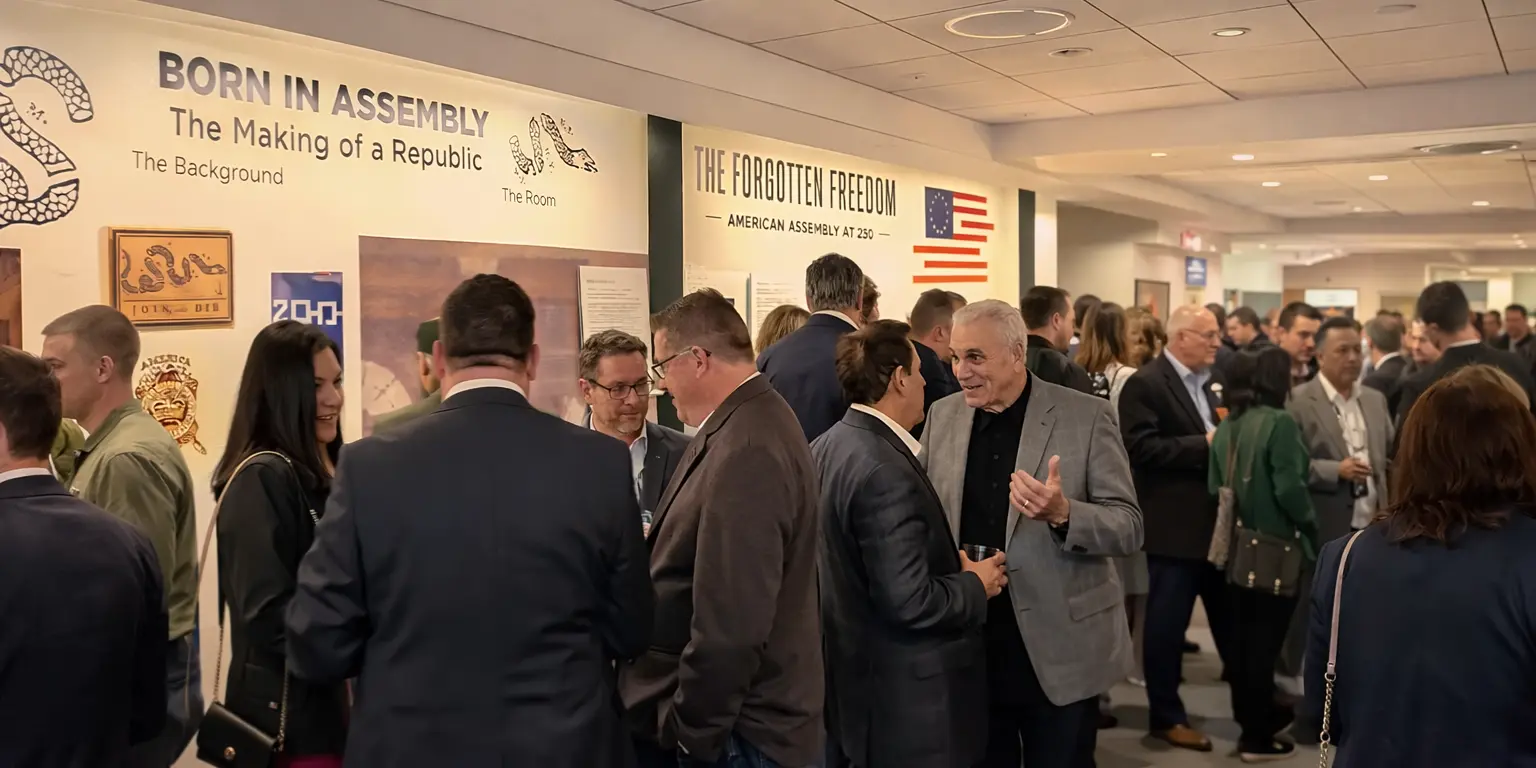 The Semiquincentennial is an opportunity to celebrate, but it is also an invitation to reflect. We have inherited the quest begun in 1776, and that quest remains unfinished.
It asks us to balance liberty with responsibility, rights with civic duty, conviction with humility, and disagreement with democratic participation. It requires us to create spaces where ideas can meet, where disagreement is welcomed, and where people are invited to think freely.
America’s greatest strength has never been solely its natural resources, military power, or economic influence. Other great civilizations have possessed tremendous wealth and power.
What distinguishes the United States is something more enduring: we are a nation founded on an idea.
That idea is liberty. At the National Liberty Museum, we are exploring ongoing quest for liberty through The Forgotten Freedom: American Assembly at 250.
With it came an enduring commitment to build, together, a more perfect union.
The American story is not one of perfection. It is the story of an imperfect people pursuing enduring ideals. It is a story of courage amid uncertainty, perseverance through failure, and faith that tomorrow can be better than today.
That is the American quest.
As we commemorate 250 years since the Declaration of Independence, we should remember that July 4 was not the finish line.
It was the moment a people chose to begin.
And the quest continues.