
Empower your students to explore the complex practice of liberty through our collection of educator guidebooks and teaching materials. Even after an exhibition at the museum closes, its stories and ideas live on through classroom-ready lessons that connect history, civic engagement, and real-world application.
Use these resources to deepen learning, enhance critical thinking, and inspire students to put liberty into action.
Curriculum Programs & Classroom Guides

Teaching Free Assembly
Lessons on Free Assembly and Free Association
This guide features lessons on the “forgotten freedom” – assembly. Through direct instruction and analysis of many artworks and artifacts in The Forgotten Freedom: American Assembly at 250, these lessons answer the five Ws and H questions about this overlooked aspect of the First Amendment. Like the exhibition series, Teaching Free Assembly goes beyond the Constitutional definition of assembly, exploring many aspects of the human act of gathering, both past and present. These first three lessons are designed to be taught together and sequentially as an introduction to the core concepts of free assembly and association.
Interested in a deeper investigation of this topic? Teaching Free Assembly includes five supplemental lessons that explore particular themes within the exhibition series. Designed to be taught after the main guide, pick and choose topics of interest to craft a thorough and impactful unit plan. Included are subjects such as family traditions, material expressions of assembly, and fandom. Check out the collection here.
Let’s Talk Educator Resource Guide
Dialogue & Conflict Resolution Classroom Activities
Adapted from the interactive museum exhibition Let’s Talk, this guide provides classroom activities that encourage constructive dialogue, perspective-taking, and skill-building around conflict and communication. Lesson plans are supported by curated partner resources to deepen learning and help teachers facilitate meaningful conversations on challenging topics in a safe and guided environment.
Word Powered Educator Resource Guide
Art Interpretation & Free Speech Classroom Activities
This guide uses artwork from Word Powered: Exploring Free Speech Through Art to explore how art can inspire civic reflection. Lesson plans guide students analyzing artistic messages, evaluating meaning, and applying critical thinking across subjects. By connecting visual art to discussions about freedom of expression, students gain new perspectives on civic issues and interdisciplinary learning.
The Year of Free Speech Educator Resource Guide
First Amendment Classroom Activities
This guide introduces students to the history and impact of free speech, highlighting champions who advanced the cause and examining the effects of harmful expression. Students explore how to exercise speech responsibly, engage in constructive dialogue, and consider the impact of their words, developing skills to participate thoughtfully in their communities.
truth* Educator Resource Guide
Media Literacy & Research Skills Classroom Activities
Based on the exhibition truth* (Sep 2022 – Jun 2023), this guide brings contemporary questions, debates, and ideas around truth into the classroom. Students explore what truth is, how to evaluate credibility, and how social and historical contexts shape understanding. Through interdisciplinary lessons, students develop media literacy, research, and critical thinking skills—essential tools for navigating information in today’s world.
Big Ideas for Little Learners (BILL) Educator Guidebook
Early Childhood Literacy & Community Values Curriculum
Big Ideas for Little Learners (BILL) introduces young children to community values, civic concepts, and literacy fundamentals through stories, games, and hands-on activities. This 7-session curriculum supports learning both at home and in formal education settings, guiding caregivers and educators through interactive lessons that build reading readiness and social-emotional understanding.
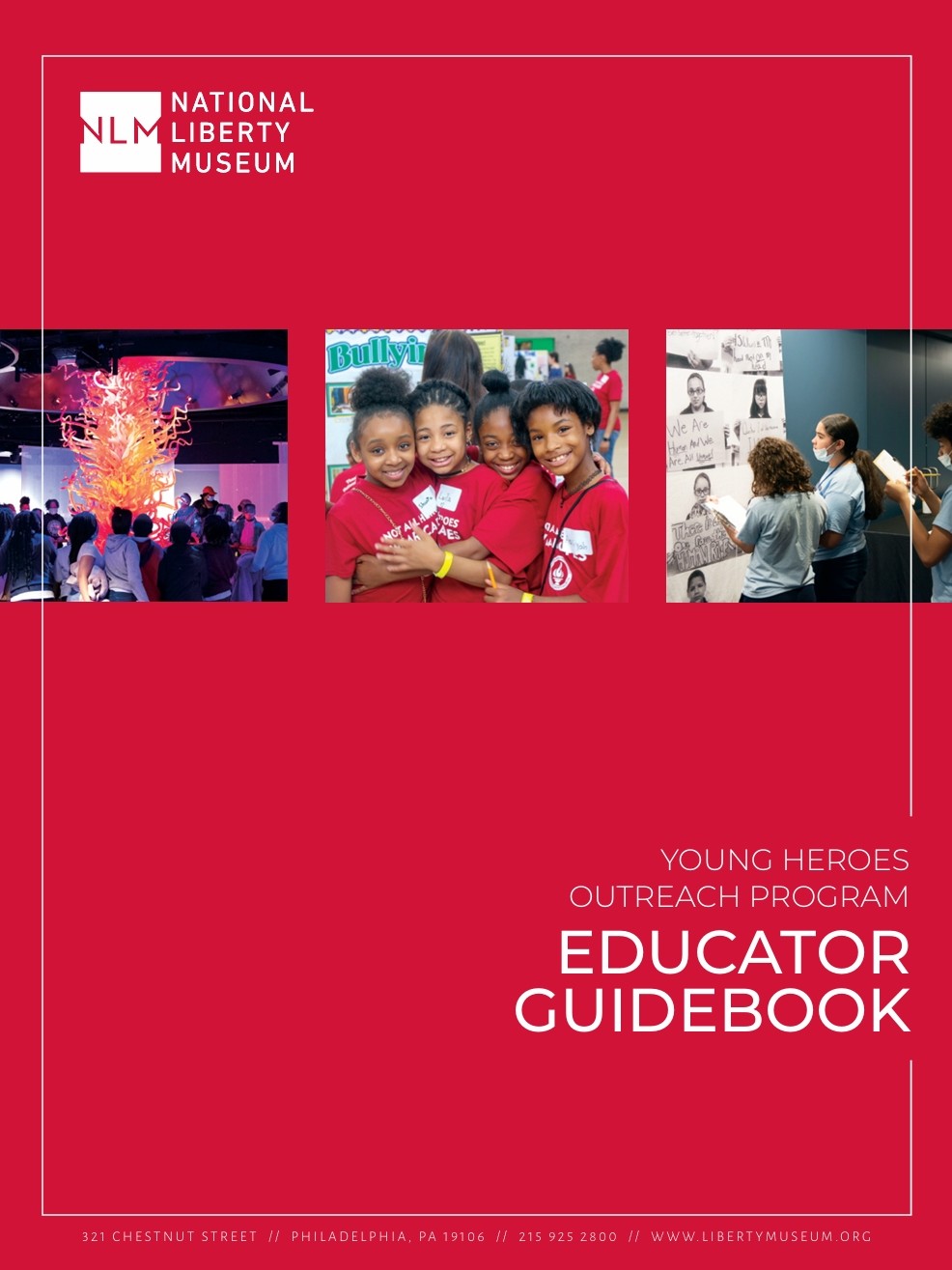
Young Heroes Outreach Program (YHOP) Educator Guidebook
4th-8th Grade Civic Action Curriculum
Using critical thinking, inquiry, and project-based learning, YHOP teaches students the essential concepts and skills that will prepare them for responsible citizenship and help them make a positive impact in their school and community. NLM supports interested teachers with a curriculum that leads students through the ideation, planning, and implementation of a civic action project. These lessons can be used independently or as a framework to complete a YHOP project.